
Conversámos com a artista Mariana Laginha (Setúbal, 1991) no âmbito da exposição RESTOS E RECANTOS, que está atualmente patente na UMA galeria até 7 de novembro, para conhecer melhor o seu percurso, o seu processo criativo e descobrir um lado mais pessoal da artista.
Mariana desenvolve uma linguagem artística contemporânea de natureza marcadamente introspetiva, intimamente ligada à fotografia, área em que se especializou no início da sua carreira. O seu trabalho, de carácter figurativo, aborda frequentemente cenas do quotidiano e objetos abandonados, evocando processos de adaptação emocional e social. O seu percurso artístico iniciou-se entre a Alemanha e os Países Baixos. Desde a conclusão da Licenciatura em Pintura pela Universidade de Évora, tem apresentado o seu trabalho regularmente, tanto em exposições individuais como coletivas.
De que forma a experiência de teres vivido e trabalhado fora de Portugal influenciou a tua prática artística?
Ter vivido fora mudou completamente a forma como encaro o meu trabalho. O meu Erasmus nos Países Baixos (em Den Bosch, na AKV St Joost) foi um verdadeiro ponto de viragem: ajudou-me a deitar abaixo vários medos e inseguranças criativas. Ainda hoje levo comigo duas grandes lições dessa altura. A primeira é a conhecida frase: “Fail. Fail again. Fail better.” A segunda acalmou a minha ansiedade de saltar entre linguagens visuais muito diferentes em cada série: percebi que, sendo eu a mesma pessoa, a minha assinatura acaba sempre por transparecer, independentemente do projeto. Com o tempo e consistência, a identidade vai-se construindo de forma natural.
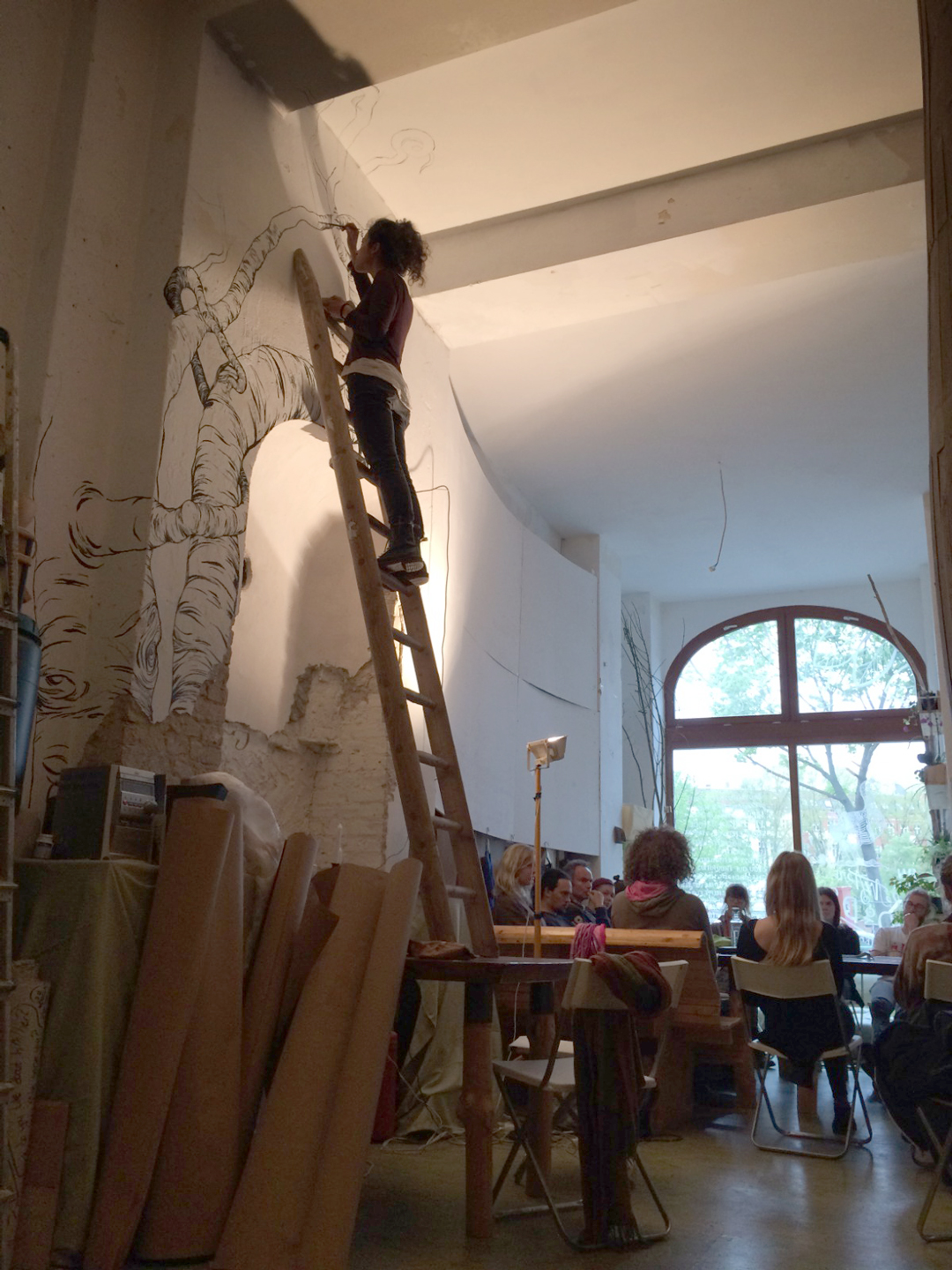
Depois, em Berlim, tive total liberdade para explorar o meu traço, testar novas ideias e expandir horizontes, tanto a nível artístico como pessoal. Foram três anos numa cidade com uma cena artística incrivelmente aberta, livre e sem preconceitos, o que me abriu a mente.
Quando começou a tua relação com a fotografia e que lugar ocupa no teu processo criativo?
A minha relação com a fotografia começou muito cedo, tanto que me especializei em fotografia analógica na António Arroio. Na altura, o plano era transitar daí para a faculdade, estudar pintura e seguir o caminho da fotografia documental. Só que, quando peguei na pintura, nunca mais a larguei!
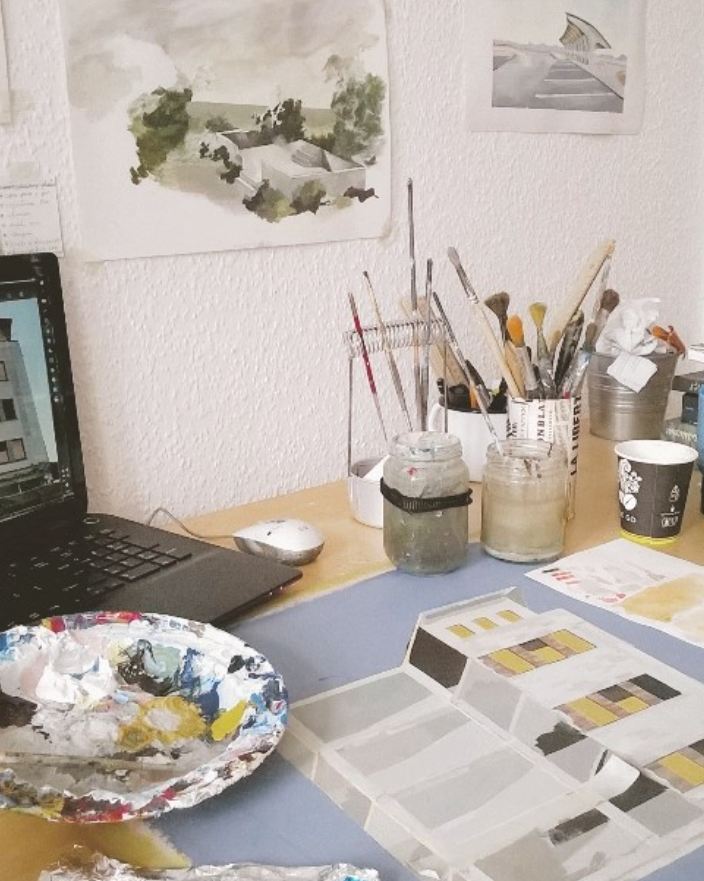
Hoje em dia, a fotografia já não é o fim, mas sim o meio. Uso-a sobretudo para criar um arquivo visual de referências que depois consulto e transporto para o desenho e para a obra final.
Como encaras a tela em branco?
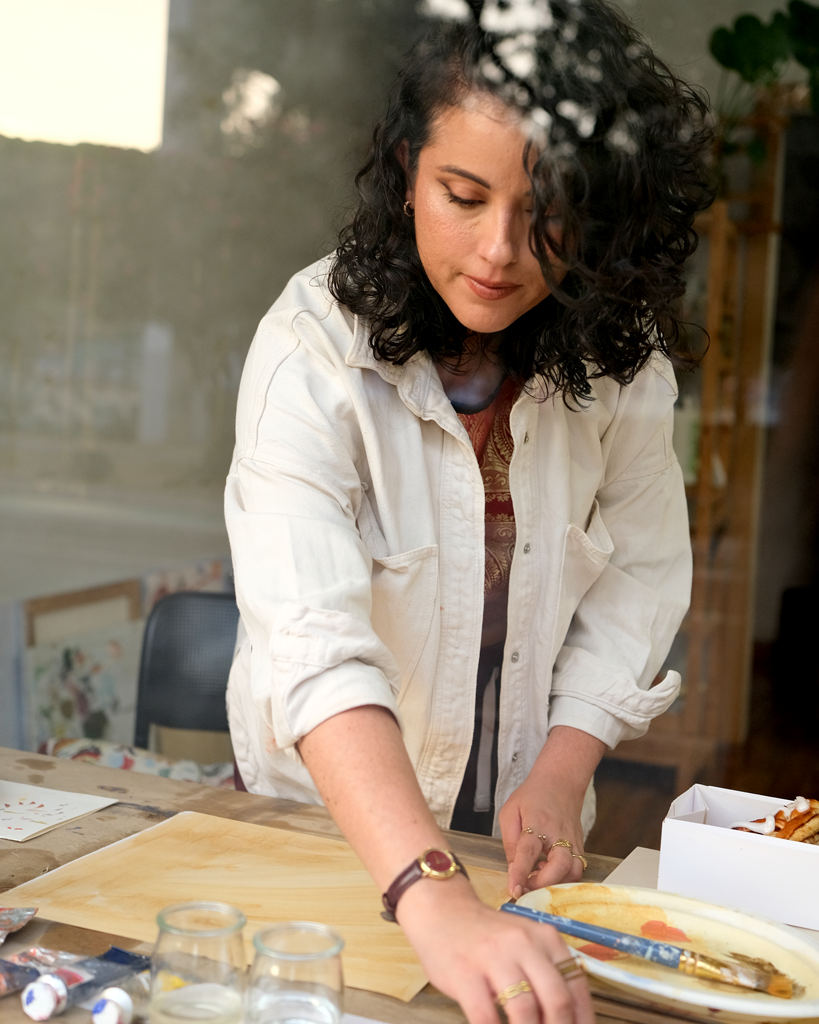
Lembro-me perfeitamente da primeira vez que pintei, por volta dos nove anos, quando a minha tia, pintora e ceramista, me deu uma paleta com cores primárias e uma tela. Deparei-me logo com essa “assustadora” tela em branco e deixei o subconsciente assumir o controlo, guiando as cores e as pinceladas até resultar num abstrato de tons fortes.
Olhando para trás, fascinou-me logo essa capacidade de criar um mundo inesperado do nada, descobrir o que vive cá dentro, seja através da intensidade de uma pincelada, dos simbolismos ou da composição. Hoje em dia já não tenho medo da tela em branco; planeio e visualizo muito mais os passos antes de começar. Dou por mim a usar o papel e a pintura quase como um espelho, como um veículo para me entender melhor a mim própria e ao que me rodeia.
Reconheces facilmente quando uma obra está terminada?
Varia muito de quadro para quadro. Há pinturas em que o fecho surge de forma muito orgânica, vejo que a harmonia de tons, a composição e o equilíbrio entre o óbvio e o sugestivo estão lá, e que a mensagem passa com clareza.
Por outro lado, há trabalhos em que preciso de declarar a obra terminada, para conseguir avançar para a série seguinte e evitar cair no erro de ruminar demasiado sobre o que já foi feito. Quando forçamos demasiado uma conclusão visual, corremos o risco de matar a espontaneidade e o lado mais primal da pintura.
Um dos temas que o trabalho desta exposição aborda é a passagem do tempo. Interessa-te mais o que é intemporal ou o que caracteriza um dado momento no tempo?
Diria que me interessa capturar o que é efémero. O detalhe exato de um momento ou de um objeto num dado instante, mas fixá-lo, cristalizá-lo de forma intemporal através da pintura.
Se o público saísse desta exposição com uma ideia ou sensação, qual gostarias que fosse?
Gostaria que cada pessoa levasse consigo um lembrete daquilo que é essencial e basal na nossa experiência humana; um momento de paz num parque, a observar a luz e as sombras através das folhas de uma árvore, dar valor ao presente, ao que foi e ao que está a acontecer agora. Quero que a exposição celebre, através destes objetos e momentos, aquilo que nos define tanto individualmente como em coletivo.
UMA Dialogues with Mariana Laginha
We spoke with artist Mariana Laginha (Setúbal, 1991) in connection with the exhibition RESTOS E RECANTOS (REMNANTS AND HIDDEN CORNERS), which is currently on view at UMA galeria through November 7, to learn more about her career and creative process and to discover a more personal side of the artist.
Mariana develops a contemporary artistic language that is distinctly introspective in nature and closely linked to photography, a field in which she specialized early in her career. Her figurative work often depicts everyday scenes and abandoned objects, evoking processes of emotional and social adaptation. Her artistic journey began in Germany and the Netherlands. Since completing her Bachelor’s degree in Painting at the University of Évora, she has regularly exhibited her work in both solo and group exhibitions.
How has your experience of living and working outside of Portugal influenced your artistic practice?
Living abroad completely changed the way I view my work. My Erasmus exchange in the Netherlands (in Den Bosch, at AKV St. Joost) was a real turning point: it helped me overcome several creative fears and insecurities. Even today, I carry with me two major lessons from that time. The first is the well-known phrase: “Fail. Fail again. Fail better.” The second eased my anxiety about switching between very different visual languages in each series: I realized that, since I’m the same person, my signature style always ends up shining through, regardless of the project. With time and consistency, identity builds itself naturally.
Later, in Berlin, I had complete freedom to explore my style, test new ideas, and expand my horizons, both artistically and personally. I spent three years in a city with an incredibly open, free, and unbiased art scene, which really opened my mind.
When did your journey with photography begin, and what role does it play in your creative process?
My relationship with photography began very early on, so much so that I specialized in analog photography at António Arroio. At the time, the plan was to move on from there to college, study painting, and pursue a career in documentary photography. But once I picked up painting, I never put it down!
These days, photography is no longer the end goal, but rather the means. I use it mainly to create a visual archive of references that I later consult and incorporate into my drawings and the final artwork.
How do you deal with a blank canvas?
I remember perfectly the first time I painted, around the age of nine, when my aunt—a painter and ceramicist—gave me a palette with primary colors and a canvas. I was immediately faced with that “daunting” blank canvas and let my subconscious take control, guiding the colors and brushstrokes until it resulted in an abstract painting with bold hues.
Looking back, I was immediately fascinated by this ability to create an unexpected world out of nothing, to discover what lies within, whether through the intensity of a brushstroke, symbolism, or composition. These days, I’m no longer afraid of the blank canvas; I plan and visualize the steps much more carefully before I begin. I find myself using paper and paint almost like a mirror—as a vehicle to better understand myself and my surroundings.
Can you easily tell when a work of art is finished?
It varies greatly from painting to painting. There are paintings in which the conclusion emerges very organically; I can see that the harmony of tones, the composition, and the balance between the obvious and the suggestive are all there, and that the message comes across clearly.
On the other hand, there are works where I need to declare the piece finished in order to move on to the next series and avoid the mistake of overthinking what has already been done. When we force a visual conclusion too much, we run the risk of stifling the spontaneity and the more primal aspect of the painting.
One of the themes explored in this exhibition is the passage of time. Are you more interested in what is timeless, or in what characterizes a specific moment in time?
I would say that I’m interested in capturing what is ephemeral—the precise detail of a moment or an object at a given instant—but fixing it, crystallizing it in a timeless way through painting.
If the audience were to leave this exhibition with one idea or feeling, what would you like it to be?
I would like each person to take with them a reminder of what is essential and fundamental to our human experience: a moment of peace in a park, observing the light and shadows filtering through the leaves of a tree, appreciating the present, the past, and what is happening right now. I want the exhibition to celebrate, through these objects and moments, what defines us both as individuals and as a collective.