
No contexto da exposição SURRENDER PARADISE, atualmente patente na UMA galeria até 10 de outubro, conversámos com a artista Joana Vieira de Castro (Lisboa, 1986).
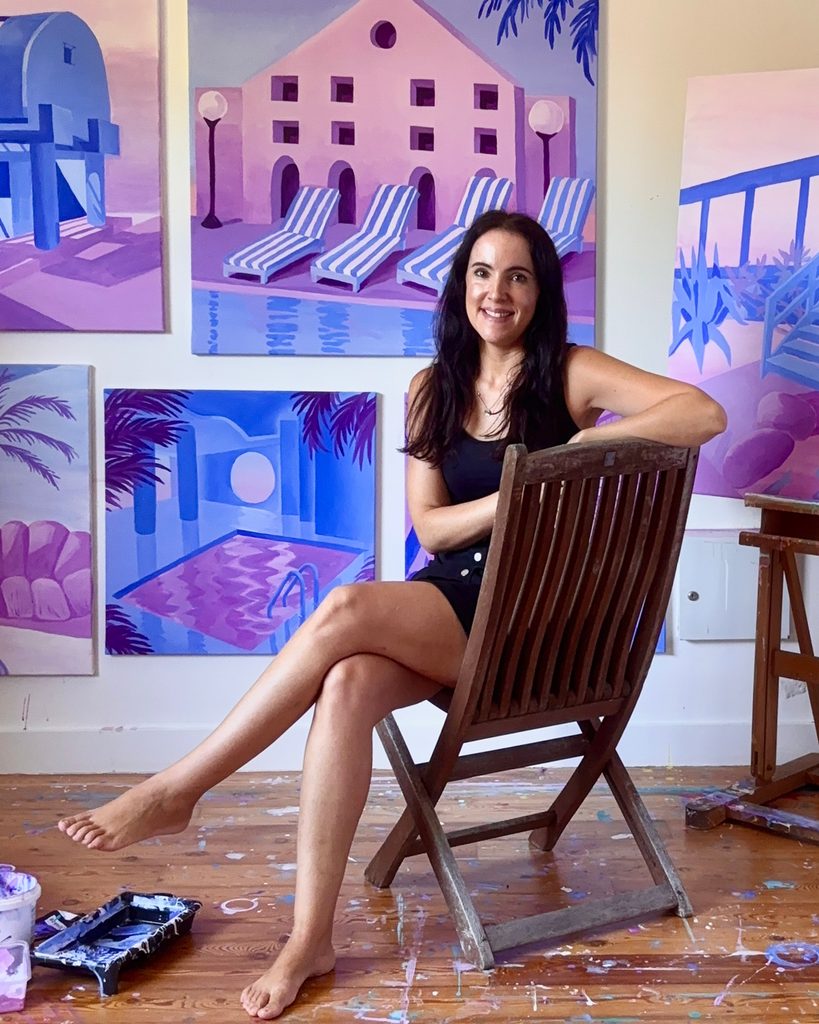
A sua prática centra-se na pintura e no desenho e explora a arquitectura e a paisagem enquanto lugares de memória, desejo e imaginação. Formada em Pintura pela Faculdade de Belas-Artes da Universidade de Lisboa e com um mestrado em Fine Art pela Central Saint Martins, em Londres, Joana Vieira de Castro tem vindo a construir espaços que evocam atmosferas ambíguas, nas quais coexistem diferentes camadas de significado.
Qual foi o teu processo criativo para a criação de SURRENDER PARADISE?
Tenho uma obsessão por colecionar imagens de espaços, tanto através de revistas de arquitectura, como de livros, especialmente com referência ao Pós modernismo porque acho particularmente interessante ter sido um estilo que não teve grande impacto no nosso país. Antes pelo contrário, existe uma certa reticência geral quanto à sua qualidade estética e isso é algo que gosto de explorar no meu trabalho. A música também considero que tenha um grande impacto nas imagens que eu crio. Por exemplo, se em determinada altura ando a ouvir um tipo específico de música, isso vai aparecer nas pinturas e nos desenhos.
Como surge este evidente fascínio pela arquitetura no teu trabalho?
Vivo numa zona que considero abundante em exemplos interessantes de arquitetura, especialmente aqueles que apareceram nos anos 70 e 80 e que, de certa forma, espelhavam alguns conceitos que me agradam, como por exemplo, a proximidade com o mar. Tenho vindo a desenvolver um arquivo fotográfico da zona no qual registo imagens de construções que me chamam a atenção. Muitos exemplos que consegui capturar já não existem fisicamente (devido por exemplo a demolições) o que torna esse arquivo de extremo interesse para mim.
Que relação estabeleces entre controlo e acaso no teu processo de trabalho?
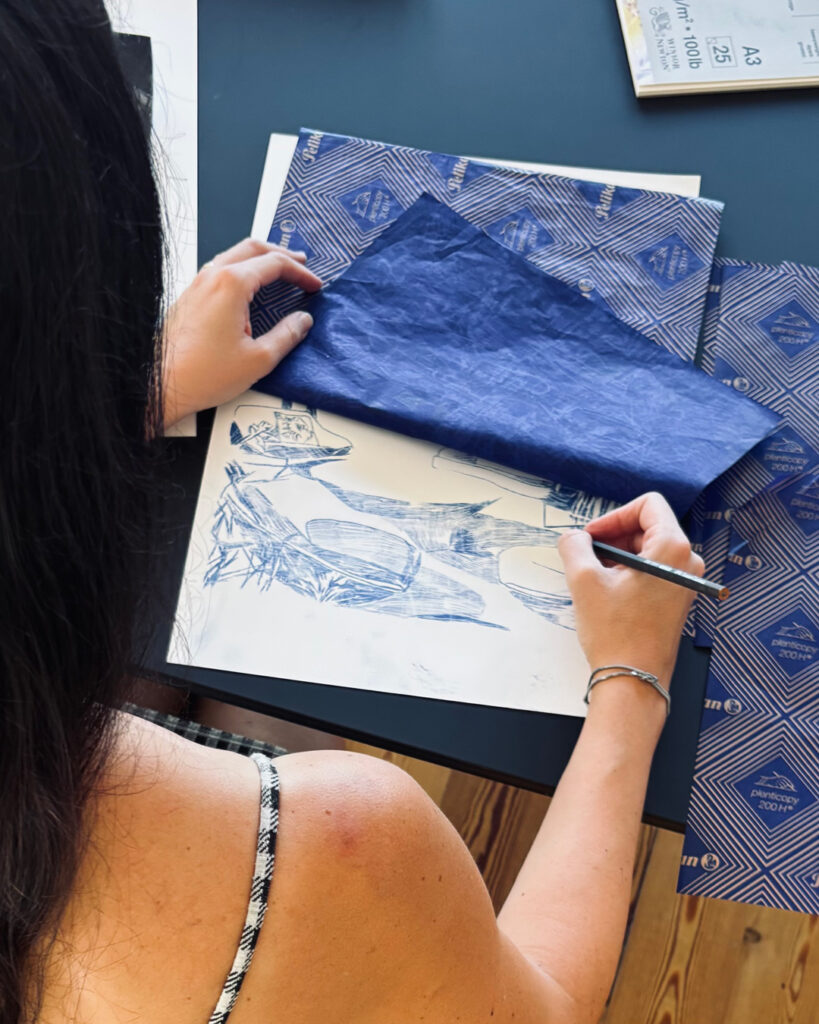
Apesar do meu processo ter uma estrutura bastante definida gosto também de incluir alguma dose de surpresa em cada etapa. Quando começo a trabalhar numa pintura não consigo ter uma ideia de como irá ser o resultado final e todo esse processo é o que mais me interessa. No desenho em papel químico, como é um desenho indirecto, não consigo ver o resultado final até terminar o desenho. Por isso diria que adoro trabalhar com o acaso e com a surpresa.
Como foi a experiência de teres tirado o mestrado em Fine Arts na Central Saint Martins in London?
Foi uma experiência muito positiva para mim, acima de tudo conheci pessoas que enriqueceram bastante a minha aprendizagem. Nesta universidade comecei a trabalhar a série de desenhos em papel químico que estou a mostrar nesta exposição. Na altura, os professores acharam muita piada aos desenhos porque não tinham conhecimento deste material que em Portugal era tão comum.
E em relação ao fecho de uma obra, reconheces facilmente quando está terminada?
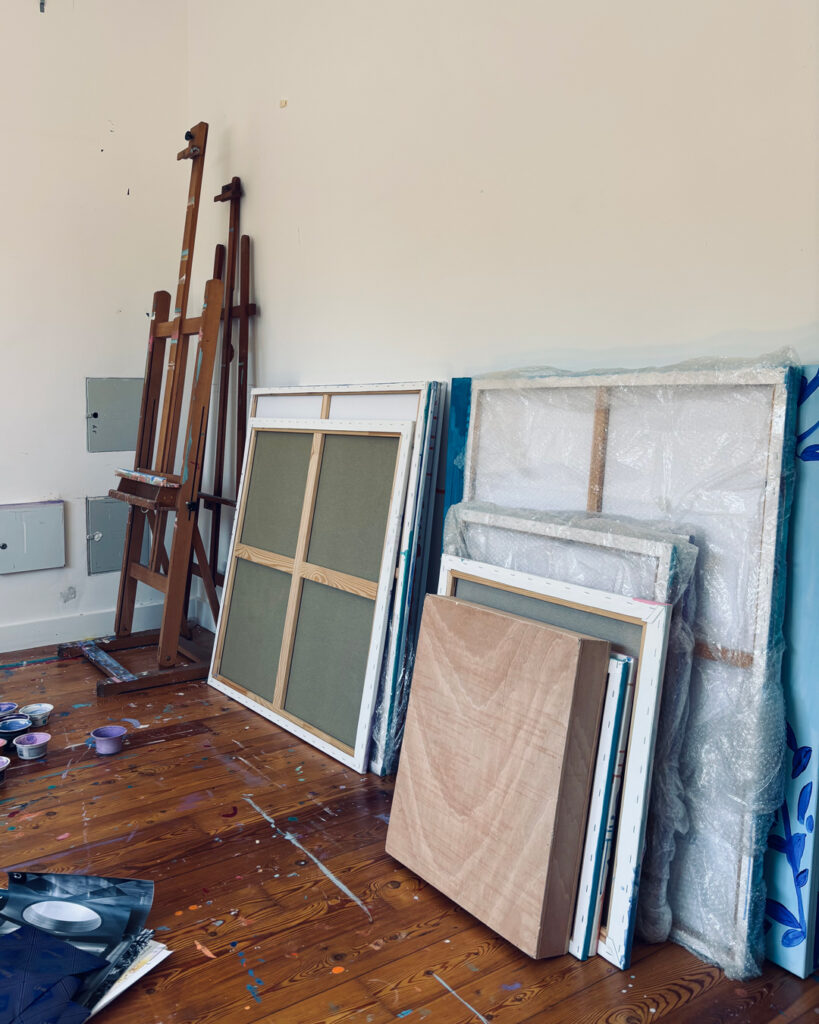
Geralmente a pintura está acabada quando deixa de me incomodar. Quando sinto que não mudaria nada naquela imagem, aí é o momento para dar o trabalho como concluído. As minhas pinturas passam por muitas fases diferentes até chegarem aquela que considero a sua melhor versão.
Se o público saísse desta exposição com uma ideia ou sensação, qual gostarias que fosse?
Uma sensação de reconhecimento. Poder reconhecer nas pinturas uma certa familiaridade. Um Déjà vu: “sinto que já vi isto antes”.
UMA Dialogues with Joana Vieira de Castro
As part of the SURRENDER PARADISE exhibition, currently on view at UMA galeria through October 10, we spoke with the artist Joana Castro Silva (Lisboa, 1986).
Her practice focuses on painting and drawing and explores architecture and landscape as sites of memory, desire, and imagination. With a degree in Painting from the Faculty of Fine Arts at the University of Lisbon and a master’s degree in Fine Art from Central Saint Martins in London, Joana Vieira de Castro has been creating spaces that evoke ambiguous atmospheres, in which different layers of meaning coexist.
What was your creative process for creating SURRENDER PARADISE?
I’m obsessed with collecting images of spaces, whether from architecture magazines or books, especially those related to Postmodernism, because I find it particularly interesting that it was a style that didn’t have much of an impact in our country. On the contrary, there’s a certain general reluctance regarding its aesthetic quality, and that’s something I like to explore in my work. I also believe that music has a major impact on the images I create. For example, if at any given time I’m listening to a specific type of music, that will show up in my paintings and drawings.
How does this evident fascination with architecture come through in your work?
I live in an area that I consider to be rich in interesting examples of architecture, especially those that emerged in the ’70s and ’80s and that, in a way, reflected some concepts I appreciate—such as proximity to the sea. I’ve been building a photographic archive of the area in which I capture images of buildings that catch my eye. Many of the examples I’ve managed to capture no longer physically exist (due, for example, to demolition), which makes this archive extremely interesting to me.
What relationship do you establish between control and chance in your creative process?
Although my process has a fairly defined structure, I also like to include a bit of surprise in each stage. When I start working on a painting, I can’t imagine what the final result will look like, and that entire process is what interests me the most. With tracing paper drawings, since they’re an indirect form of drawing, I can’t see the final result until I finish the drawing. So I’d say I love working with chance and surprise.
What was it like to get your master’s degree in Fine Arts at Central Saint Martins in London?
It was a very positive experience for me; above all, I met people who greatly enriched my learning. At that university, I began working on the series of drawings on tracing paper that I’m showing in this exhibition. At the time, the professors found the drawings very amusing because they weren’t familiar with this material, which was so common in Portugal.
When it comes to finishing a piece, can you easily tell when it’s done?
Generally, a painting is finished when it no longer bothers me. When I feel I wouldn’t change a thing about that image, that’s when I consider the work complete. My paintings go through many different phases before reaching what I consider their best version.
If the audience were to leave this exhibition with one idea or feeling, what would you like it to be?
A sense of recognition. To be able to recognize a certain familiarity in the paintings. A sense of déjà vu: “I feel like I’ve seen this before.”