
The history of societies is, to a large extent, the history of their social stratification. From the rigid orders of feudalism to the more diffuse hierarchies of contemporary economies, the division between classes has persisted as a central organizing principle, although it has been continuously reconfigured. While in many areas of public life these distinctions have been progressively softened, or at least made less explicit, there remain, however, spaces where the division remains not only visible but structurally embedded.
We have long been accustomed to the idea that the sky is a common territory, an open, continuous space without visible borders—until we board a plane. Air travel, once the privilege of a minority, has today become widely accessible, thanks to the expansion of routes and the proliferation of airlines. Any individual can, theoretically, rise into the skies. However, as Quase Cachi reveals, this democratization is only partial. Access to flight does not imply an equitable sharing of the experience.
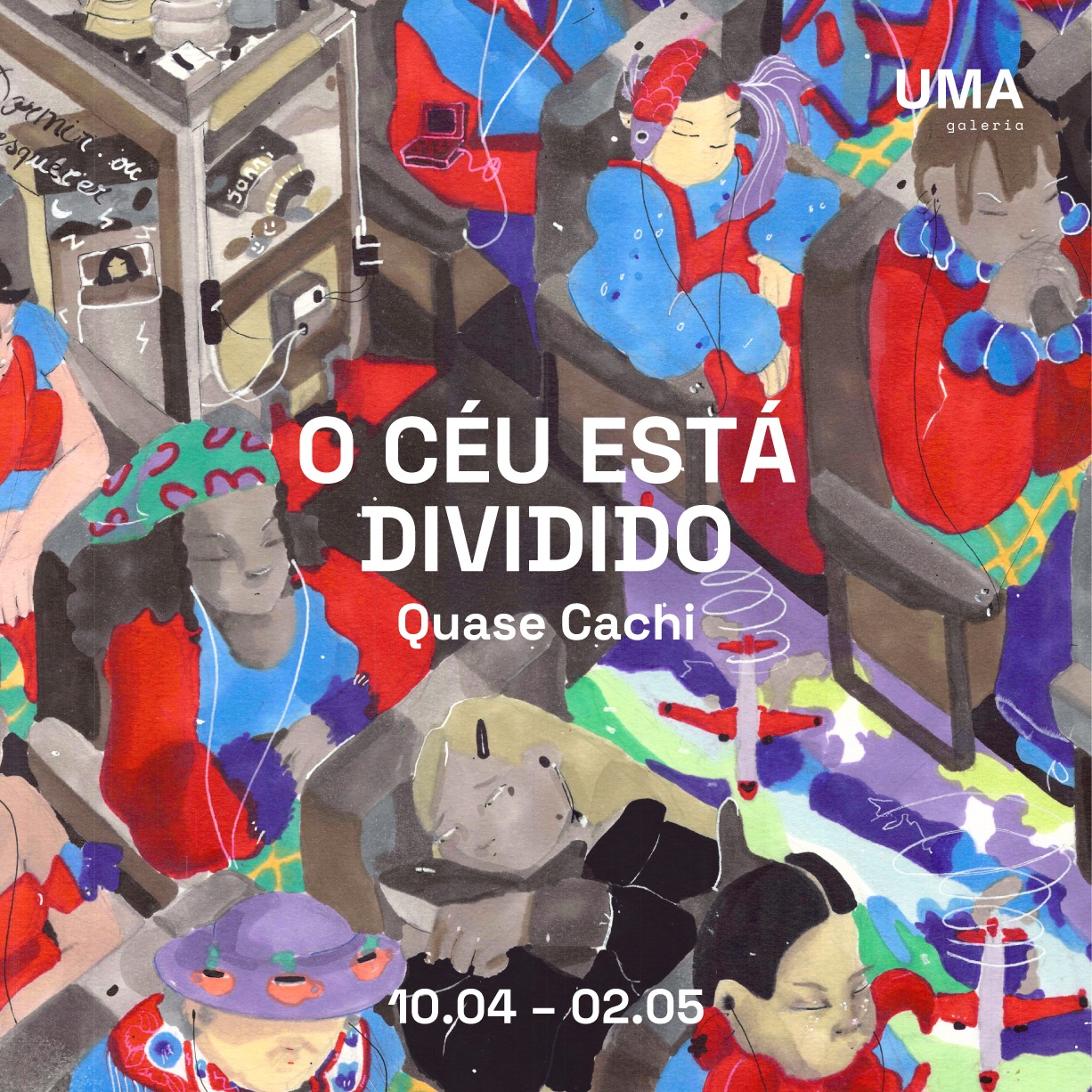
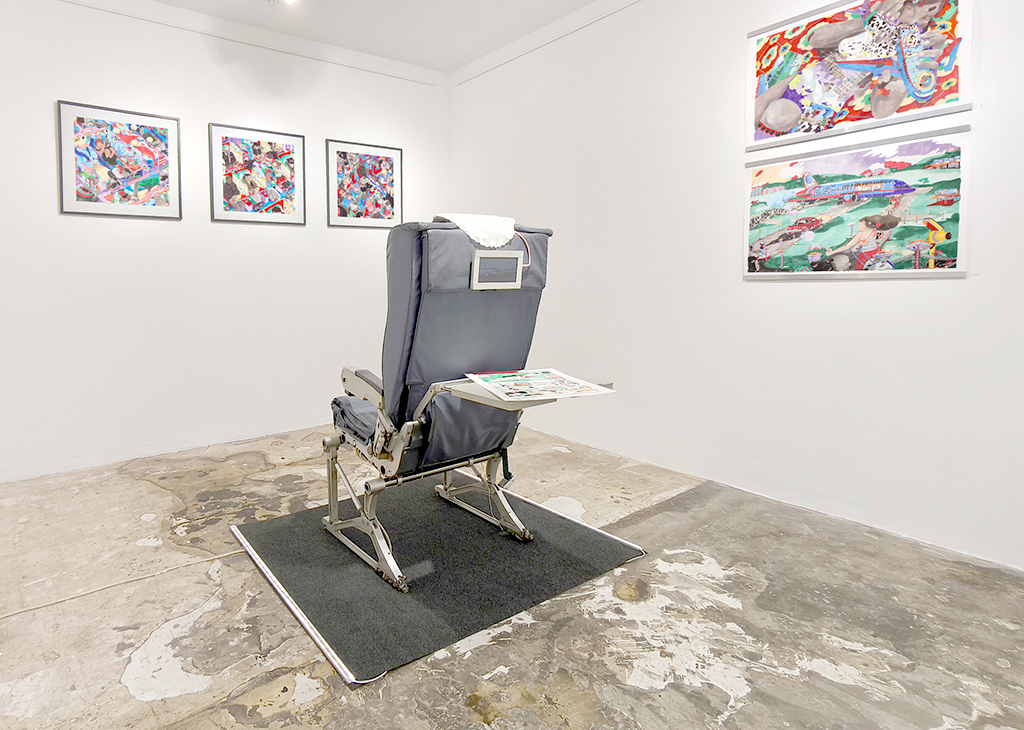
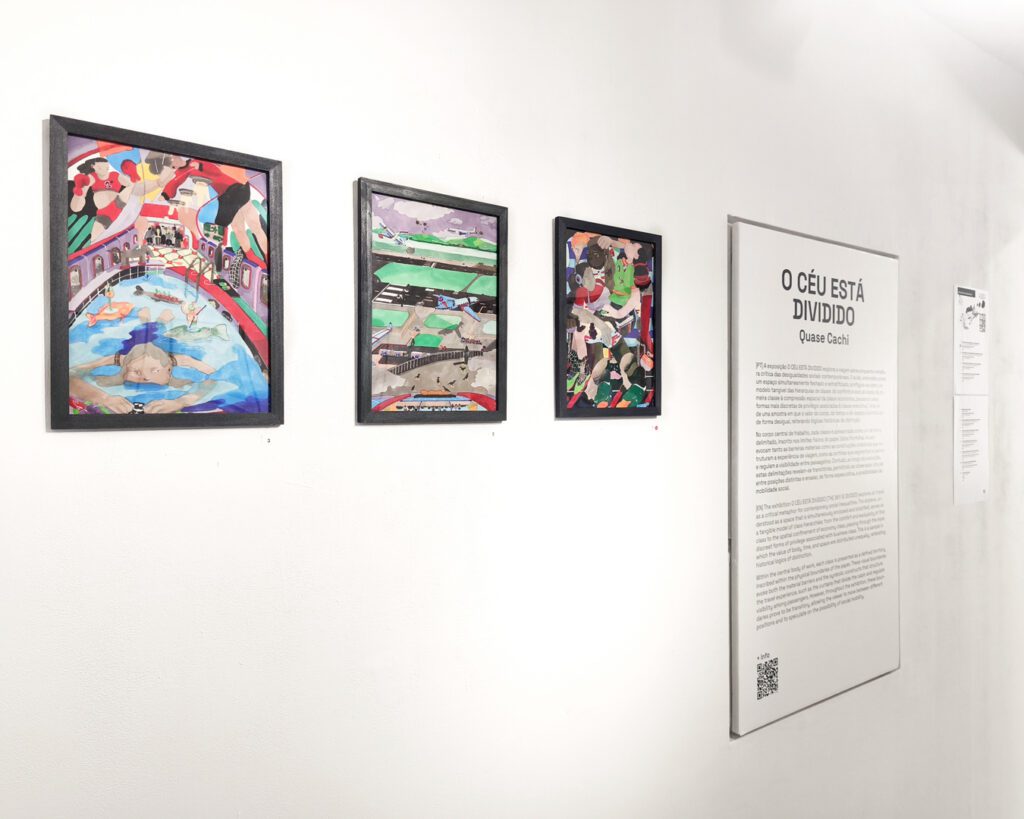
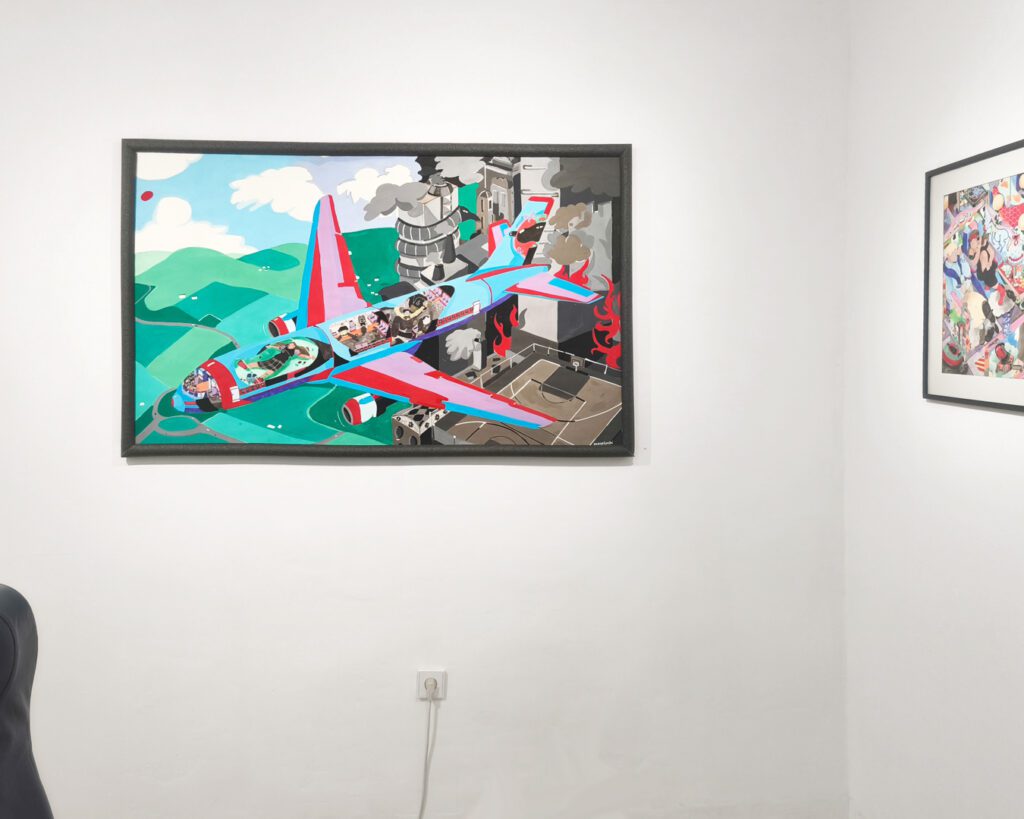
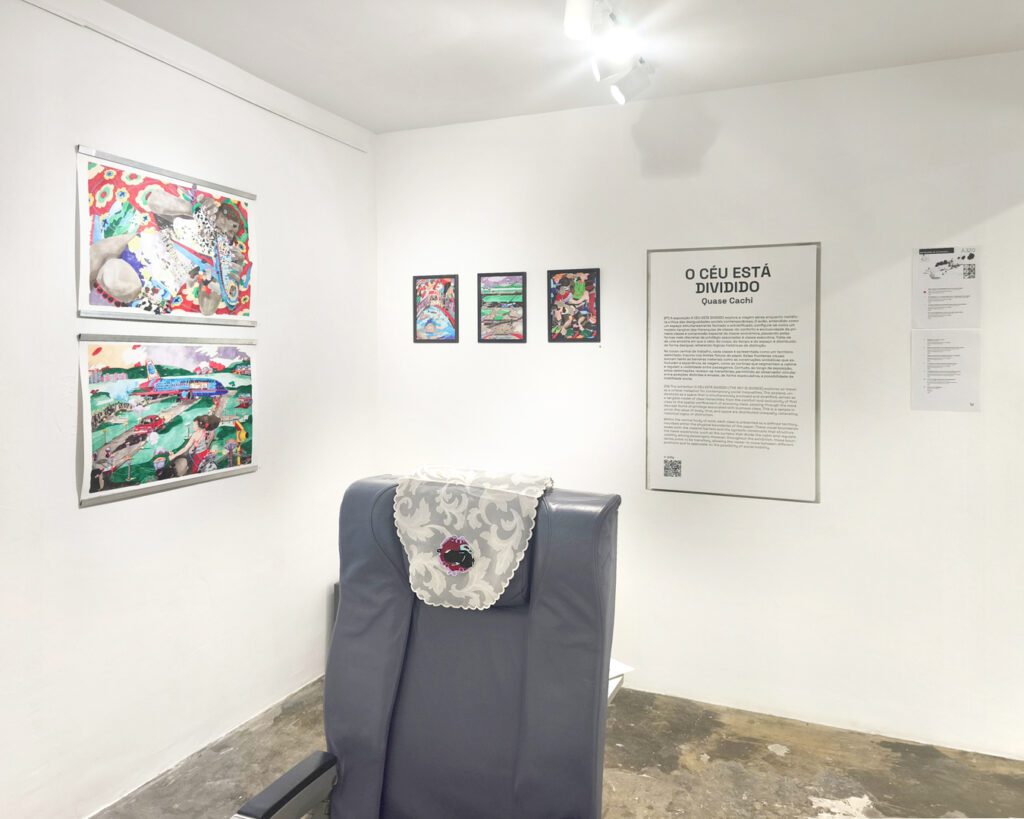
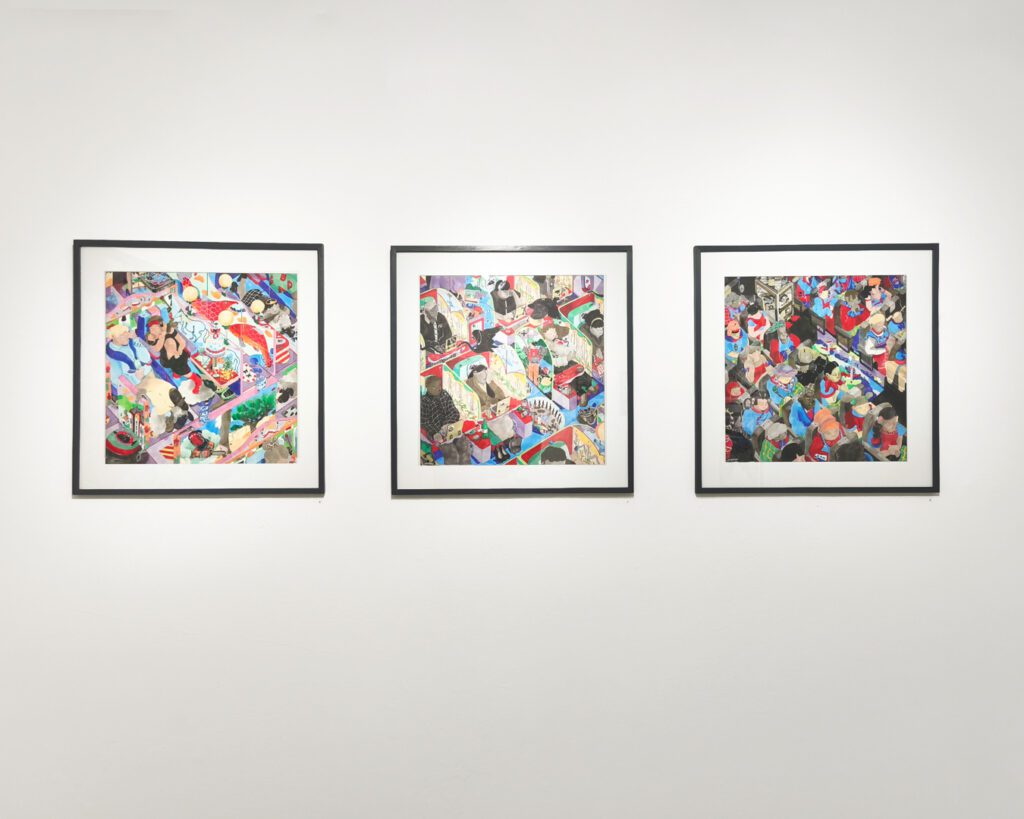
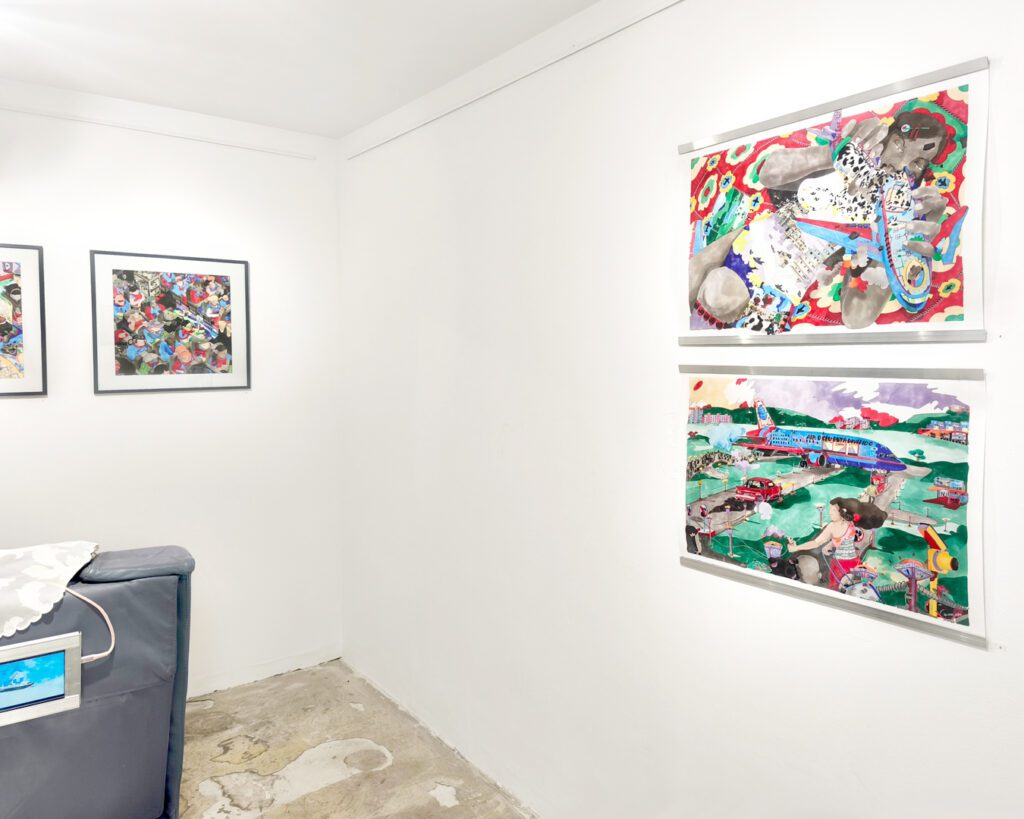
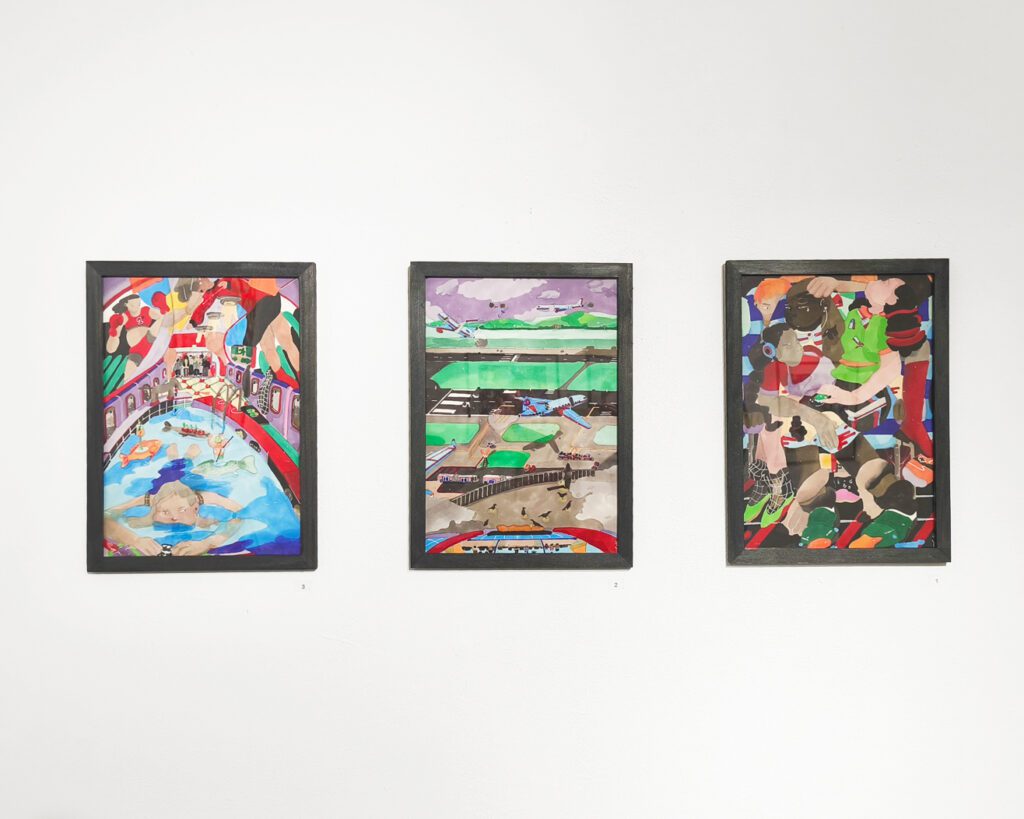
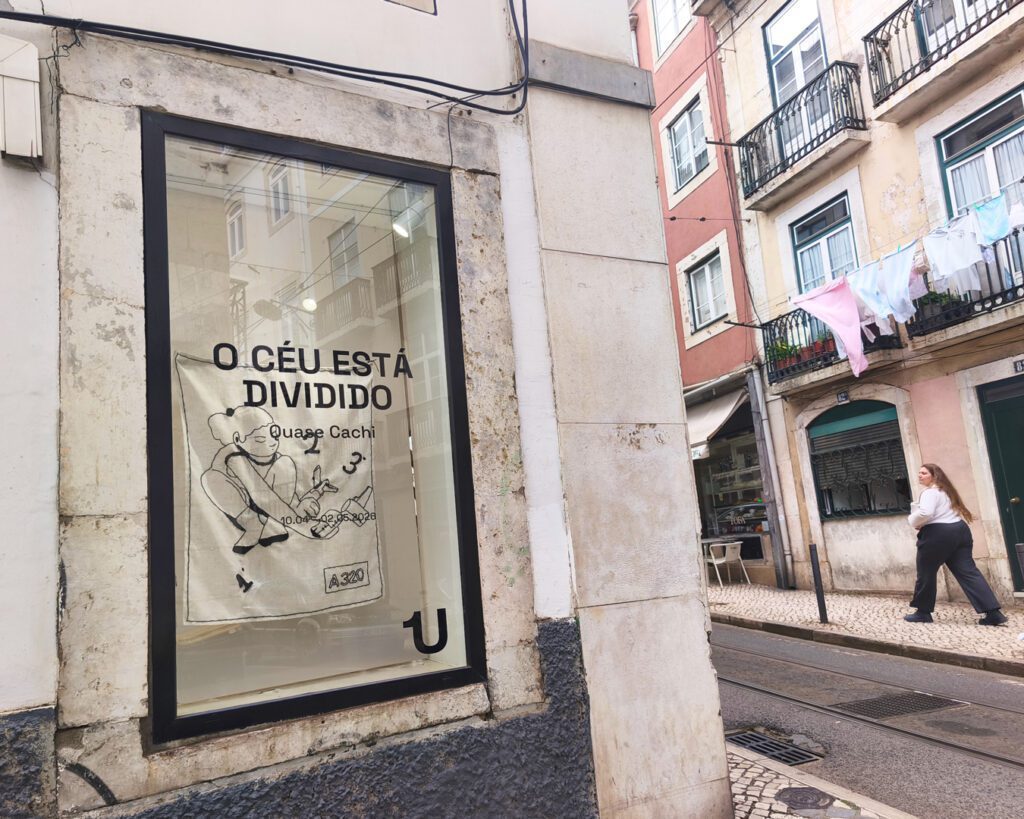
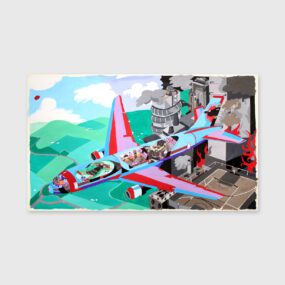
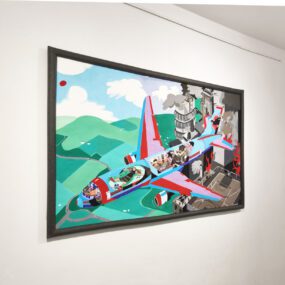
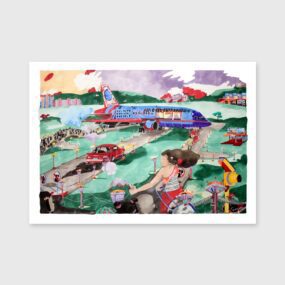
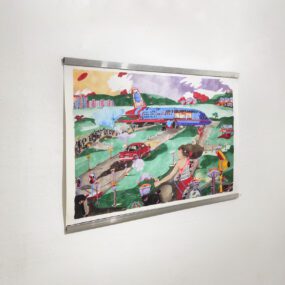
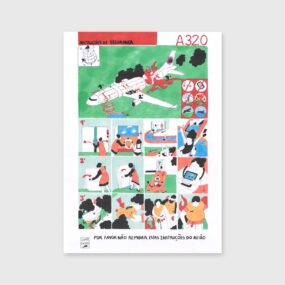
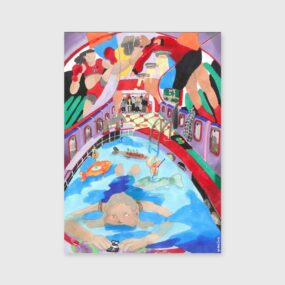
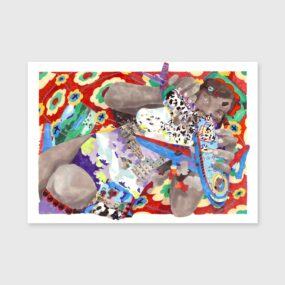
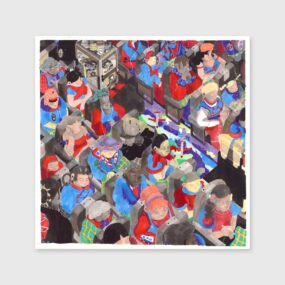
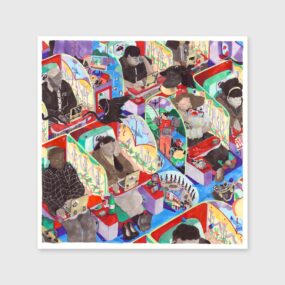
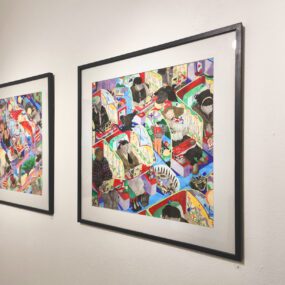
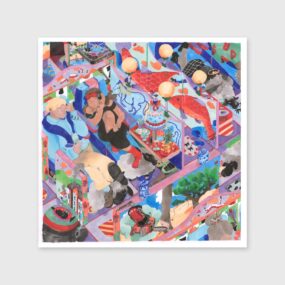
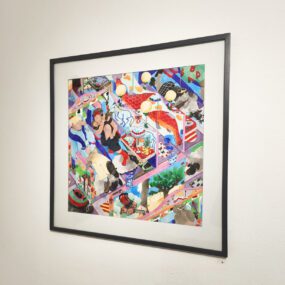
The exhibition O CÉU ESTÁ DIVIDIDO (THE SKY IS DIVIDED) explores air travel as a critical metaphor for contemporary social inequalities. The airplane, understood as a space that is simultaneously enclosed and stratified, serves as a tangible model of class hierarchies: from the comfort and exclusivity of first class to the spatial confinement of economy class, passing through the more discreet forms of privilege associated with business class. This is a sample in which the value of body, time, and space are distributed unequally, reiterating historical logics of distinction.
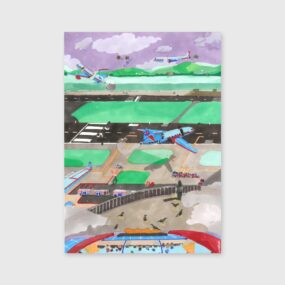
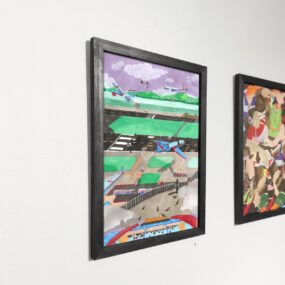
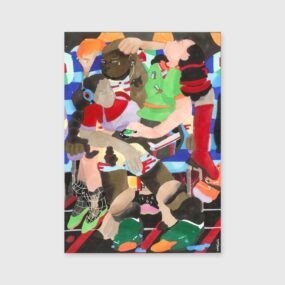
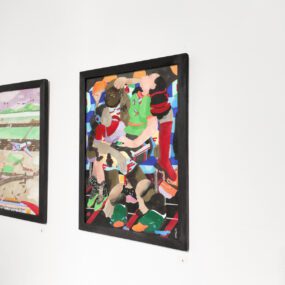
Within the central body of work, each class is presented as a defined territory, inscribed within the physical boundaries of the paper. These visual boundaries evoke both the material barriers and the symbolic constructs that structure the travel experience, such as the curtains that divide the cabin and regulate visibility among passengers. However, throughout the exhibition, these boundaries prove to be transitory, allowing the viewer to move between different positions and to speculate on the possibility of social mobility.
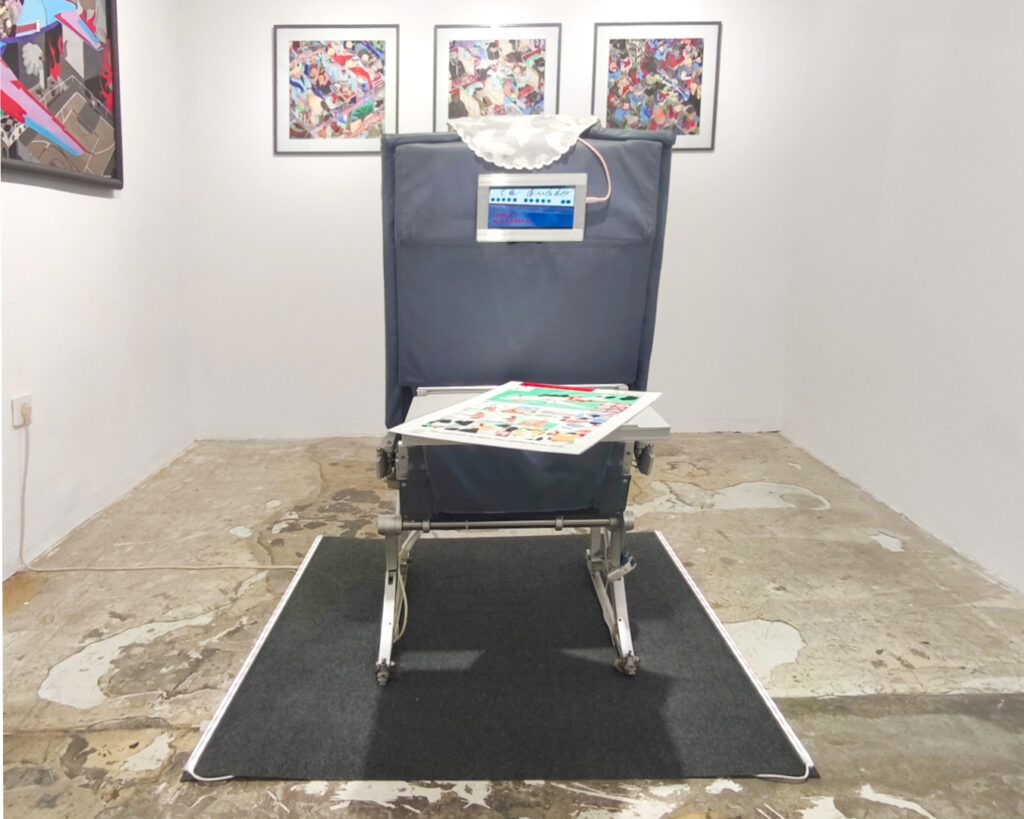
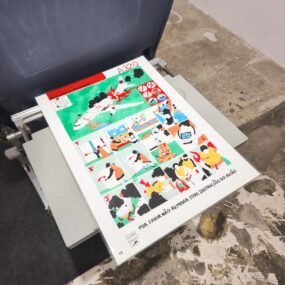
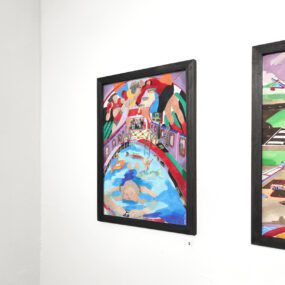
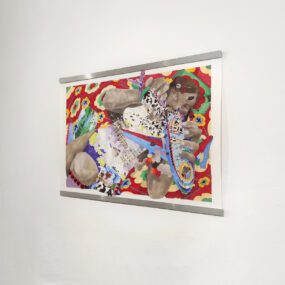
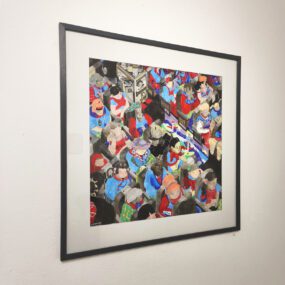
The exhibition articulates multiple artistic languages, with a particular focus on illustration embedded within installation-based works. The formal and chromatic choices introduce a dimension of saturation and instability that contrasts with the compartmentalized organization of each class, suggesting a latent tension, as if the balance of this seemingly stable system were constantly on the verge of breaking.
The visual component is further expanded by video recordings and a sound dimension, contributing to the construction of a sensory experience that invites the viewer to inhabit this suspended space. In this context, the airplane ceases to be merely a means of transportation and asserts itself as a critical device: a place where physical proximity coexists with deeply rooted social distances.
The opening will take place on Friday, April 10, from 6:00 p.m. to 8:30 p.m.
This show will be on display until May 2, and admission is free.
BIOGRAPHY
Mariana Clemente (Porto, 1994), known artistically as Quase Cachi, develops a practice centered on illustration and installation, weaving together visual narratives that explore memory, identity, and intercultural experience.
Her career began in the field of International Trade, having earned her bachelor’s degree from ISCAP in 2019, the year she shifted her focus to the visual arts. That same year, she enrolled in the Master’s program in Illustration and Animation at IPCA and in a specialization program in Illustration at FBAUP, devoting herself entirely to artistic expression.
The city of Porto has played a central role in her work, serving as the foundation for dense, detailed compositions and as a starting point for a dialogue with other places. This aspect was further developed during her artist residency in Ireland at the Creative Spark Print Studio, where she refined her visual language, particularly in terms of color choices.
Throughout various artist residencies in Japan, her practice expanded through the integration of installations, which broaden the narrative and interactive dimensions of her work, and the development of a strong community-oriented aspect, grounded in dialogue with local contexts and the intersection of cultural references. These experiences led to an evolution toward more detailed compositions connected to the present moment, while maintaining a nostalgic component associated with memory.
In recent years, she has been developing a consistent international career, with exhibitions in countries such as Ireland, Japan, Mexico, and the Netherlands. Currently, she is part of Fonte, Ateliers Comunitários, a project that engages with the residents of Massarelos.
Artworks
-
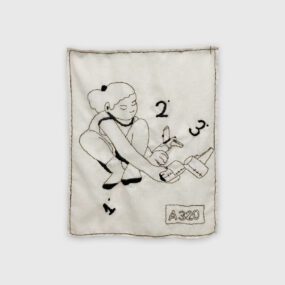
Crescemos divididos – Quase Cachi
141,51 €
Start Date: 2026-04-10
Finish Date: 2026-05-02